CCM Associates
  • Home
  • Mediation Training
    • What Attendees Say
    • Cancellation Policy
  • Family Group Conferencing Training
  • Restorative Justice Training
  • Assessment & Intervention
  • About
  • News
  • Contact

The Hidden Superpower of Mediation: Empathy in Action

8/31/2025

0 Comments

 
Empathy is often described as a soft skill—but in reality, it’s a strategic asset. In high-stakes environments like law, education, social work, and leadership, the ability to understand and respond to others’ emotions is what separates effective professionals from exceptional ones. Mediation training doesn’t just teach conflict resolution—it cultivates empathy as a practical, repeatable skill.

Empathy Is More Than a Feeling—It’s a Cognitive Skill
Neuroscience research shows that empathy activates specific regions of the brain associated with emotional regulation and decision-making. According to a study published in Frontiers in Psychology, empathy is linked to improved interpersonal communication, reduced bias, and better problem-solving outcomes. Mediation training strengthens these neural pathways by teaching participants to listen actively, reframe perspectives, and remain neutral under pressure.

Empathy in Action: What Our Participants Say
CCMA’s training is designed to help professionals move beyond surface-level understanding and develop deep listening and emotional insight. This kind of transformation isn’t theoretical—it’s lived. Our trainees report feeling more confident in difficult conversations, more attuned to others’ needs, and better equipped to lead with compassion. Review their testimonials here.

Why Empathy Matters in Professional Settings
  • In Law: Empathy helps attorneys understand client motivations and negotiate more effectively.
  • In Education: Teachers and administrators use empathy to de-escalate conflicts and build inclusive classrooms.
  • In Social Work and Mental Health: Empathy is foundational to trauma-informed care and therapeutic rapport.
  • In Leadership: Empathetic leaders foster trust, reduce turnover, and improve team performance. Daniel Goleman calls empathy “the essential skill of emotional intelligence.”

Build Empathy Through Mediation Training

CCMA’s mediation training goes beyond theory. Through guided role-play, structured feedback, and real-world scenarios, participants learn how to:
  • Recognize emotional cues and respond constructively
  • Maintain neutrality while validating others’ experiences
  • Use empathy to uncover shared interests and build consensus

Ready to Lead with Empathy?

CCMA’s virtual mediation training is interactive, accessible, and designed for professionals who want to lead with emotional intelligence. We use Zoom and Google Classroom to deliver a dynamic experience that fits your schedule. Whether you’re in law, education, social work, or leadership, our training will help you turn empathy into action.
​
Explore upcoming training dates and register now
0 Comments

Mediation Training: A Strategic Investment for Leaders

8/17/2025

0 Comments

 
If you’re a leader, you know that in our current complex landscape you must do more than manage. Leaders are expected to navigate conflict, foster collaboration, and drive performance in diverse teams. But few leaders have in-depth training in these vital skills. Mediation training equips leaders with the tools to do just that, transforming interpersonal challenges into opportunities for growth and innovation.

Why Mediation Skills Matter in Leadership
Mediation is more than resolving disputes - it’s about cultivating empathy, active listening, and strategic negotiation. These skills are essential for leaders who must:
  • Address workplace tensions before they escalate
  • Build trust across departments and hierarchies
  • Foster inclusive environments where diverse perspectives are valued
  • Lead with emotional intelligence and resilience

​According to CEO Today, mediation is “the holy grail of leadership,” enabling leaders to transform dysfunction into constructive dialogue. Leaders trained in mediation are better equipped to unlock innovation, retain talent, and maintain high-performing teams.

The ROI of Mediation Training
The financial case for mediation training is compelling. Research from the Workplace Mediator highlights that UK employees spend an average of 2.8 hours per week dealing with conflict—translating into lost productivity, increased absenteeism, and higher turnover. Mediation programs help reduce these costs by:
  • Preventing legal disputes and formal grievances
  • Lowering stress-related absenteeism
  • Improving employee engagement and retention

Organizations that invest in mediation training see measurable improvements in morale, collaboration, and bottom-line performance. For senior leaders, the ability to resolve conflict efficiently can save thousands in recruitment and litigation costs, while enhancing organizational reputation and cohesion.

A Call to Action for Forward-Thinking Leaders
If you're a leader ready to elevate your impact, mediation training is a strategic move. It’s not just about resolving disputes - it’s about leading with clarity, compassion, and confidence.

 Register now for virtual mediation training with CCMA and take the next step in your leadership journey. Join colleagues from across the country as you learn from a dozen mediation experts. Our next training is October 22-26 – don’t miss this chance to elevate your skills, and your career. 
0 Comments

Why Mediation Skills Are Essential in Any Profession

2/3/2025

0 Comments

 
In today’s fast-paced world, communication is more important than ever, and conflicts are inevitable. Whether you’re a business professional, attorney, counselor, social worker, educator, or anyone working with people, the ability to mediate disputes can elevate your career in countless ways.

At its core, mediation is about helping people find common ground. It’s not just about resolving conflicts—it’s about creating a space where all parties feel heard and respected, leading to solutions that benefit everyone. These skills are incredibly valuable in any profession. Here’s why:
  1. Improved Communication
    Effective mediators are also effective communicators. You’ll learn how to actively listen, ask powerful questions, and ensure that all voices are heard. This not only makes you a better negotiator but helps you build stronger relationships with colleagues, clients, and stakeholders.
  2. Conflict Resolution
    Conflict is inevitable, but how you handle it is key. Mediators have the tools to defuse tension and lead parties toward collaborative solutions. This helps prevent misunderstandings from escalating into bigger issues, saving time, resources, and preserving professional relationships.
  3. Increased Empathy
    Mediators are skilled at understanding different perspectives. By applying these skills, you can foster empathy in your workplace, improving team dynamics, and leading to better collaboration and trust.
  4. Enhanced Leadership Skills
    Leaders who can mediate disputes are invaluable. They know how to keep a team unified and focused on common goals, even in challenging times. Being a mediator can set you apart as someone who remains calm under pressure and fosters a supportive, solution-oriented environment.
  5. Career Advancement
    Mediation skills are a highly sought-after asset. In industries ranging from law to education to healthcare, professionals who can navigate difficult conversations with ease often rise to leadership positions faster.

No matter your profession, mastering the skills of a mediator can transform the way you approach problems, interact with others, and make decisions. Ready to take your communication and conflict management skills to the next level?

Register now for Communication and Conflict Management Associates’ Virtual Mediation Training, March 5-9, 2025!
0 Comments

Mediation Super-Powers for Counselors and Mental Health Professionals

8/31/2024

0 Comments

 
We often have counselors and other mental health professional take part in our mediation training. These professionals not only make outstanding mediators and conflict resolution professionals, but they also find mediation training , serves to enhance their skills and broaden their professional capabilities.

Here are some key benefits of taking part in mediation training for those in the mental health field:
  1. Improved Conflict Resolution Skills: Mediation training equips counselors with advanced techniques to manage and resolve conflicts between clients, whether in couples therapy, family counseling, or group sessions. This makes them more effective in helping clients navigate disputes.
  2. Enhanced Communication Techniques: Mediation training emphasizes active listening, neutral language, and the ability to facilitate open dialogue. Counselors can use these techniques to help clients express themselves more clearly and understand others' perspectives.
  3. Increased Client Empowerment: Mediation focuses on empowering parties to find mutually agreeable solutions. Counselors can apply this approach to encourage clients to take an active role in resolving their own issues, fostering a sense of control and responsibility.
  4. Broader Professional Opportunities: With mediation training, counselors can expand their practice to include mediation services, offering an additional stream of income and a new area of expertise. This can be particularly valuable in settings like family law, workplace disputes, or community conflicts.
  5. Reduced Burnout: By using mediation techniques, counselors can foster a more collaborative and less adversarial environment in their sessions. This can lead to more positive outcomes, reducing the emotional toll on both the counselor and the clients.
  6. Better Crisis Management: In high-conflict situations, such as divorce or custody battles, mediation training can help counselors de-escalate tensions and guide clients toward constructive solutions, minimizing the potential for long-term harm.
  7. Ethical and Legal Awareness: Mediation training includes instruction on the ethical and legal aspects of conflict resolution. This knowledge can help counselors navigate complex situations more effectively, ensuring they adhere to professional standards.
Overall, mediation training can make counselors more versatile, effective, and confident in handling a wide range of client issues, ultimately leading to better outcomes for their clients.

Read more about the value of mediator who is also a mental health professional in this article by Ilene Diamond from Mediate.com. And, if you'd like to build your own mediation skills, consider taking part in the CCMA's next virtual mediation training!
0 Comments

Why Mediators Make Good Leaders

8/25/2024

0 Comments

 
Since we began offering mediation training at Missouri State University over 20 years ago, we've heard time and again from participants that the training not only prepared them to mediate disputes, but that it has a transformational impact on their professional lives. 

One example of this is the way in which mediation skills transfer into leadership skills. In her article for the TCM group, Claire Gearon shares her own reflections on this subject, including how mediation skills lead to a mindset shift for leaders, build listening skills, teach invaluable questioning skills, and help leaders foster an empathetic environment. 
​
Check out her full article at transformationalculture.com/why-mediators-make-good-leaders/. And if you'd like to build your own mediation and leadership skills consider taking part in the CCMA's next virtual mediation training!
0 Comments

Victim-Offender Dialogue Training Offered this October

9/14/2022

1 Comment

 
This October 21-22, CCMA will offer a virtual victim-offender dialogue facilitation training for the  Office of Dispute Resolution and Family Court Programs for Missouri's 7th Judicial Circuit. This training is free for anyone interested in contracting as a paid facilitator with the Victim-Offender Dialogue program in Clay County, MO.
 
The training is sponsored by the Office of Dispute Resolution and Family Court Programs for Missouri's 7th Judicial Circuit, and is funded by a Division of Youth Services grant. For more information, please contact Director Dr. Teri Hargrave via email or at 816-736-8402.

About this Training
When individuals commit an offense they harm their victims, society, and themselves. Restorative justice is about healing and addressing wrongs that have been committed and repairing the relationships in the community. This training will prepare participants to facilitate dialogues between someone who has committed an offense and the person/people impacted by that offense. 

About Victim-Offender Dialogue
Victim-offender dialogue is a facilitated discussion between someone whose offense has caused harm and those impacted by their actions.
  • All parties are prepared in advance to take part in a structured dialogue about the harm caused.
  • Those involved have a chance to “tell their story” and ask questions of one another.
  • The parties then work together to develop a plan to repair the harm caused and hold the person whose actions caused the harm accountable. This plan may include the payment of restitution, the completion of meaningful community or University service, or other creative options.
  • The goal of the plan is both to repair the harm but also to reintegrate those who have caused the harm back into the community. 

About Communication & Conflict Management Associates' Training
CCMA's founders Dr. Charlene Berquist and Heather Blades have been providing training in restorative justice and victim-offender dialogue since 2006.
This training covers basic restorative justice principles and begins to prepare participants to facilitate victim-offender dialogues in juvenile and adult cases. No prior mediation experience is necessary to become a victim-offender dialogue facilitator. 

For More Information
Read more about CCMA's victim-offender dialogue training on our website, or contact us to learn more about offering similar training for your court, educational institution, or community organization at [email protected]. 
1 Comment

Virtual Mediation Training: High-Impact and Convenient State-Approved Course

8/8/2022

0 Comments

 
Join CCMA October 5-9 for highly interactive online mediation training from the comfort of your home or office.

This dynamic event is led by CCMA co-founder and emeritus professor Dr. Charlene Berquist, with her colleague Heather Blades providing Zoom production and technical support and administration. Together the two have over 30 years of experience offering outstanding mediation training. Additionally, the event incorporates guest presentations and mediation role play coaching from over a dozen other professional mediators (with experience in all types of mediation, including civil mediation, family mediation, employment mediation, dependency mediation, and more),

The event is designed to meet the mediation training standards of most states, and it has previously been approved in Missouri, Arkansas, Kansas, Texas, Louisiana, and Arizona. Don't see your state listed, or have questions about training approval? Contact us! 
Not sure if you will enjoy an online mediation training? Well, here's what a few of our past training participants have had to say: 
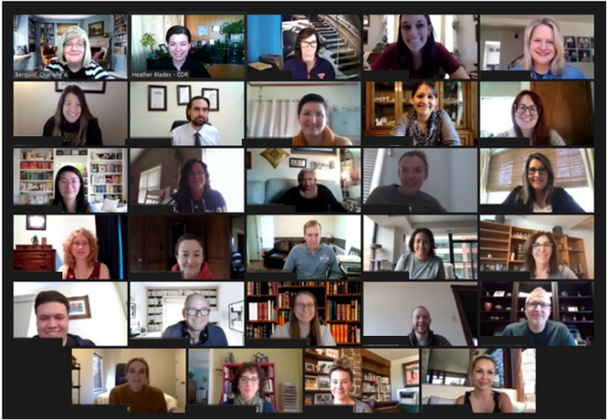
  • This was one of the most engaging trainings that I’ve participated in or even conducted.
  • I’ve been in various Zoom trainings for a year, and this was my favorite in terms of allowing participation but keeping it moving along.
  • Even via Zoom, I felt continually engaged with the group as a whole.
  • This training has empowered me to address conflict regardless of whether or not it’s my personal or professional life.
  • This training has improved my communication skills and given me a new way to help others.
  • The training was better in every way than I’d expected and a great first step in developing a new skill set.
Learn more or register now for this event!
Picture
0 Comments

MSSU Leadership Academy  - Focus on Conflict Management

12/13/2021

1 Comment

 
Picture
This past December the CCMA founders Dr. Charlene Berquist and Heather Blades provided a virtual, half-day workshop on communication and conflict management for Missouri Southern State University’s faculty and staff leadership academy.

The session focused on the causes and dynamics of conflict, managing emotions, how culture impacts conflict, and how to take the initiative to intervene early in conflict situations.

Participants in the session indicated they appreciated the insights and knowledge shared with their team. In the words of one attendee, “Being reminded to step back and think about what is on the plate of the other individual involved in conflict was a great reminder. When wrapped up in conflict, sometimes it feels like others are out to ‘get you,’ but it was good to be reminded that they have very full plates too, and I need to consider that.” Another shared: “I really loved how the practice scenarios…were incredibly real and applicable to the conversations I am navigating daily.” Yet another said: “The CDR is a great resource, I love anything they put on!”

For More Information on Customized Trainings and Workshops
​CCMA's customized virtual training and workshops can vary from an hour to several days and focus on a variety of topics related to communication and conflict management. We also have an extensive referral network and love connecting clients with our associates for specialized training and workshop topics. For more information, email [email protected]. 

1 Comment

Fall 2021 Virtual Civil and Family Mediation Trainings a Success

11/22/2021

1 Comment

 
We (CCMA founders Dr. Charlene Berquist and Heather Blades) have a nearly 20-year track record for offering outstanding mediation training. When we transitioned to providing this training in a virtual instructor-led format in the fall of 2020 for the Center for Dispute Resolution at Missouri State University, we made great efforts to ensure participants would continue to have an outstanding training experience via Zoom.

This past October and November we again offered our mediation training virtually, and our participants agreed it was an engaging, enjoyable, and professionally enriching experience.

Fall 2021 Mediation Trainings Recap
We are experienced with offering highly interactive online training that incorporates lecture, small group activities, discussion, role play, and other dynamic elements in a socially-distanced format. Our fall mediation trainings continued this tradition.

The trainings, led by CCMA founder Dr. Charlene Berquist, with Associate Director Heather Blades providing Zoom production and technical support and administration, incorporated guest presentations and mediation role play coaching from 17 professional mediators (with experience in all types of mediation, including civil mediation, family mediation, employment mediation, dependency mediation, and more).

Our 53 attendees came from across Missouri, as well as from Arkansas, Arizona, Illinois, Maryland, and Texas. They included attorneys, mental health practitioners, social workers, educators, faith leaders, and other professionals, as well as advanced Missouri State students.

Attendees Thrilled with Virtual Training Model
The virtual format of our mediation training makes the event accessible and convenient while still providing an unparalleled learning experience.

Attendee evaluations of this training were outstanding, with participants universally indicating that the trainers were knowledgeable, that the training was well organized, that the structure and format were engaging, that participation and interaction were encouraged, and that the training met or exceeded their expectations.

In the words of a few of our participants:
  • Absolutely wonderful training!! I’ve completed a lot of different classes over the years, and this one may be my favorite one so far due to the organization, high quality of instruction, role plays, and incredible support throughout.
  • I was really impressed with all the training methods and tools used, and how seamlessly everyone...worked together to create such a wonderful learning experience for each of us.
  • Each part of the 5 days of training was insightful and served a purpose. My personal favorite parts were the first 3 days of training with all the incredible content and instruction given around foundations in mediation, communication styles, conflict management approaches, etc.
  • I was concerned about how we were going to be able to interact since it was via Zoom, but it was done so wonderfully it felt like we were in the room together.
  • There wasn’t a single coach I had that I did not learn something from. I appreciated the variety in background and experience.
  • I learned so much from you all! I think this training is just the tip of the iceberg and there is so much more to learn.
  • Overall, I really, really enjoyed this experience. I didn’t quite know what to expect coming into it, but was excited to find that it more than exceeding any expectations and I loved the learning experience very much.
  • I think that participation and interaction were very much encouraged. Being put into roles and mediations this way… forced me out of my comfort zone, but in a very good way.
  • I am honestly blown away at how much I’m taking away from the training. I feel prepared to do whatever I want to do next, and have the knowledge of how to do it.
  • While I have a long way to go, I do feel very prepared to begin my career in mediation. I also feel very supported and that there is a safety net should I ever need help.

For More Information on Mediation Training
For more information on CCMA's mediation training offerings, check our training page or join our mailing list. Or, to learn about customized mediation or conflict management training, contact CCMA founder Dr. Charlene Berquist at [email protected].

1 Comment

Managing Conflict Over the Holidays

11/1/2021

1 Comment

 
Picture
The holidays are a chance to relax, reconnect with family, and celebrate together. But for many , this fun and festive time is also fraught with the potential for awkward, uncomfortable, and even upsetting interactions with loved ones. But fear not! The tips below will help you mentally prepare so you can make the most of your time with family. Additionally, they will equip you with strategies to manage any challenging conversations or conflicts that may arise as you spend quality time with your nearest and dearest.

Before you get together with family:
  • Be grateful. Take time to think deliberately about all you have to be thankful for. Make a list of each family member you’ll spend time with and write down 1-2 things you appreciate about each person. Gratitude has a positive impact on your emotional health, reduces stress, and will create a different mindset and context for your family holiday. By being mindful of what you like and appreciate about each person you are more likely to “see” those things in your interactions with them.
  • Prepare yourself. Be prepared for some conflict, and approach time with family with a sense of realism. Prepare yourself to stay neutral and avoid taking comments personally. You know who in your family may rub you the wrong way or try to start an argument. Consider making a plan in advance for how you will handle these interactions so you aren’t reacting out of stress or anger in the moment.
  • Communicate in advance. Let your family know about your plans and expectations for how you will spend your time. For example, your sister may assume you’ll want to spend ALL your time with her, while you plan to visit other friends during your time off. Letting her know early what your plans are will help avoid hurt feelings and enable you to set expectations and establish boundaries in advance of your visit.
  • Be realistic about change. As families grow and time passes, traditions and rituals often change. Accept that you may have to let some go, and put your energy into finding new ways to celebrate together that fit with your and your family’s life circumstances.

While you are with your family:
  • Keep conversations neutral. Avoid discussing divisive and personal issues, like religion or politics, or when you will get married or graduate (if these are sensitive issues), or other issues that tend to cause conflict. If a family member tries to start a conversation that will probably become an argument, change the subject or find a reason to leave the room. Remember – it takes two to tango! By adjusting your response to the other person, you can alter the dynamic of the relationship.
  • Choose not to respond. If you are feeling attacked or criticized by something a family member says to you, ask yourself “Do I NEED to respond?” When we respond out of anger or defensiveness, the situation is likely to escalate. Surprisingly often we can end the drama simply by not responding, or by saying “OK” and moving on. No response IS a response, and a powerful one. 
  • Accept the reality of who people really are. If you are interacting with difficult family members, don’t attempt to change them. You will only get into a power struggle that causes defensiveness and invites criticism. Remember, there is only one person you can control or change: yourself! This can feel frustrating, but when we display and model positive behaviors, others are more likely to follow our lead. And even if their negative behaviors continue, at least you can look back on your choices and feel proud that you acted calmly and maturely.
  • Be curious. Sharing holidays with family who hold different values and beliefs can be stressful! If you decide to engage in discussions about topics on which you disagree, instead of trying to defend your point of view or persuade the other person to your way of thinking, approach your family members with curiosity. Actively listen and seek to understand their point of view. Being genuinely curious about their beliefs, values, hopes, and fears helps to open up a deeper dialogue. When you get to the core of what’s important to your family member, it often allows a richer understanding that may not have seemed possible had you chosen to “debate” them.
  • Know your limits. It is OK to limit the time you spend around family. Set up realistic limits and stick to them. Plan time or activities that allow you to take care of yourself – this may mean taking a walk, enjoying a good book for an hour, listening to a podcast, soaking in a warm bath, or other activities that take you away from the holiday stress and help you recharge. In the words of Audre Lorde, “Self care is not self-indulgence, it is self-preservation.”
  • Forget about perfection. A wise person once said, “The key to happiness is low expectations.” Too often we strive for perfection and set ourselves up for failure. Instead of focusing on what isn’t perfect about your holiday, make a point to recognize everything you have to appreciate.
  • Help others feel recognized and appreciated. Sometimes in our own stress we forget that the holidays are stressful for others as well. Help your family members feel more relaxed, loved, and valued by making a point to tell them something you appreciate about them, or by clearly recognizing something they have done well over the past year. We too often assume others know what we are thinking or how we feel about them. Just a few words of love, support, appreciation, or encouragement can mean a lot to our loved ones.

We hope these tips help you as you prepare for holidays! 

1 Comment
<<Previous

    Authors

    Write something about yourself. No need to be fancy, just an overview.

    Archives

    August 2025
    February 2025
    August 2024
    September 2022
    August 2022
    December 2021
    November 2021
    October 2021
    July 2021
    February 2019

    Categories

    All
    Custom Workshops
    Family Group Conferencing
    Mediation Training
    Restorative Justice Training

    RSS Feed

www.CCM-Associates.com
[email protected]
Picture
  • Home
  • Mediation Training
    • What Attendees Say
    • Cancellation Policy
  • Family Group Conferencing Training
  • Restorative Justice Training
  • Assessment & Intervention
  • About
  • News
  • Contact